
Gearheads and Chatelaines
Appreciating gear and the tools of the trade

I grew up in a house with a lot of gear. My father is an outdoorsman who enjoys mountain climbing, biking, kayaking, and skiing. In my childhood, he really tried to get me to take up his hobbies but it didn’t work. Most of the time I would end the day in tears.
Even though I was never transformed into an intrepid mountain climber or biker, I always loved the gear that went with these activities. Even for me, the least sporty person you’ve ever met, stepping into an REI is like going down the rabbit hole into Wonderland. During my 20th birthday party, me and my friends made a pilgrimage to my basement to ogle my father's expansive collection of climbing harnesses and carabiners.
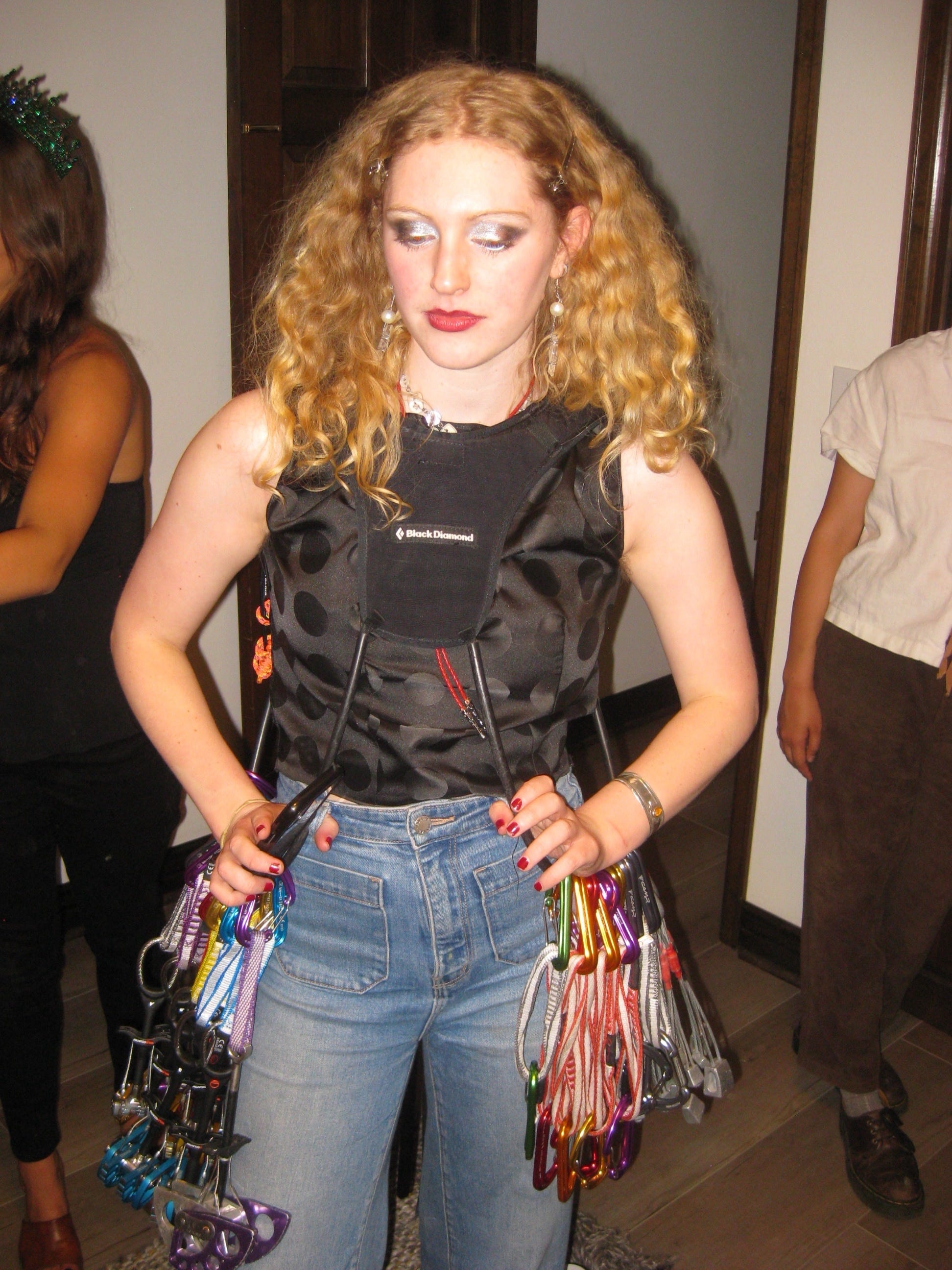
I have recently become obsessed with the concept of being a “gearhead,” someone who is very into mechanical or technical things. Normally, this term refers to someone interested in car parts or outdoor gear, but I have come to realize that I am also a gearhead. As a fashion designer and seamstress, I have my own version of gear. I feel the same amount of reverence for a well-tuned-up sewing machine as a downhill skier feels towards their freshly waxed skis.
“Fashioning Wonder: A Cabinet of Curiosities”, the current exhibition at The Museum of FIT, Is an incredible exhibition for many reasons, but one reason I’m so obsessed with it is that many of the items on display are what I would call fashion “gear”. Both fashion items and tools of the trade.
The “Artisanship” section of the exhibition pairs garments made with advanced technical skills alongside the tools of fashion.
Hat Blocks:
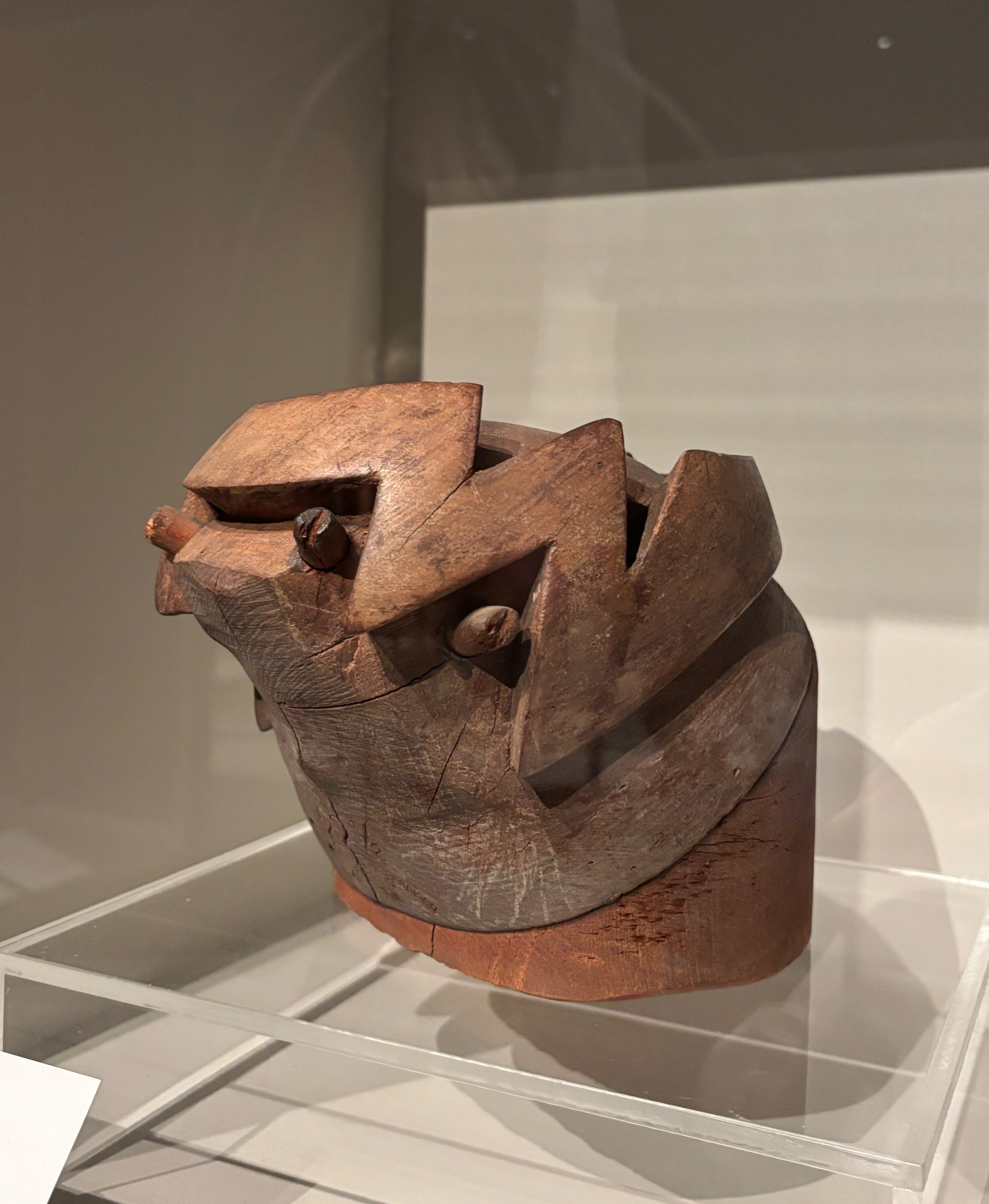
We don’t really wear hats like we did in the first half of the 20th century so to most people millinery is a foreign concept. I did not know what I was getting myself into when I enrolled in an evening millinery class. We were introduced to a closet full of vintage hat blocks of various shapes and sizes. To me, they looked like a strange alien rock garden. I also found out that the silly elective that I had signed up for was actually an incredible amount of work. To shape a felt capeline into the shape of the hat block takes an incredible amount of hot steam, push pins, rope, and burning the nerves off of your fingertips by stretching hot wet fur felt with your bare hands.
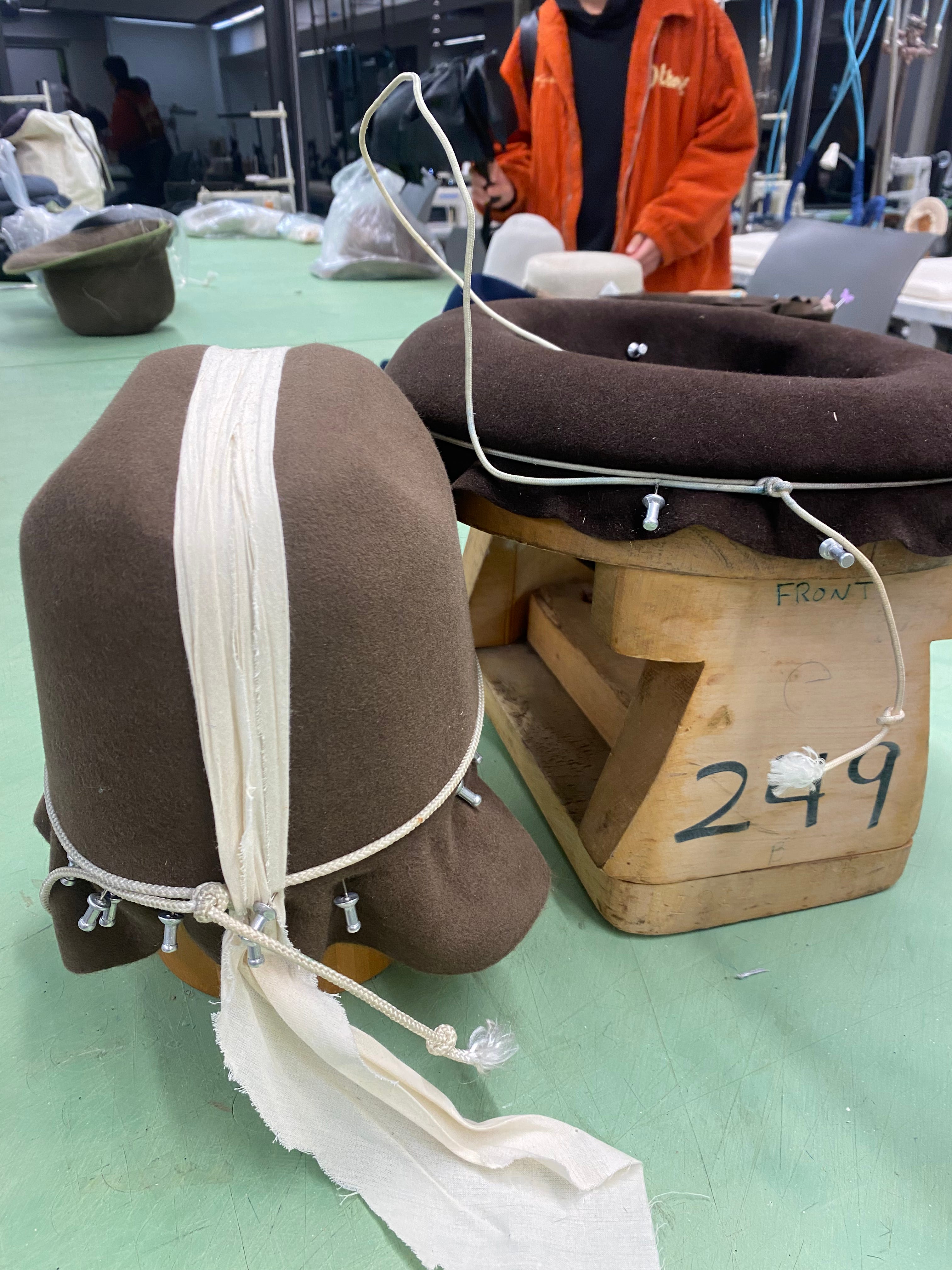
Knitting Sheaths:

This object was something I had never encountered before. According to the exhibition, knitting sheaths were tucked into a belt or apron strings and were used to support the base of the knitting needle to increase the knitter’s speed- rather than what I thought they were for which was to encase the needles.
I know how to knit, but I would call my skills mediocre, I can basically only knit rectangles. My late grandmother however was an incredible knitter. As a child, I used to pour over her knitting supplies with much interest. Fascinated by the stitch markers, stitch counters, and knitting needle organizers that was her gear.
The “What is it?” section of the exhibition displays what I would describe as “wearable gear”. Fashion objects that are made for a specific purpose but are very ornate. Most of these objects are from the 18th and 19th centuries and have faded into obscurity. The exhibition challenges the viewer to consider the object and guess at its use before flipping up the panel that reveals the use of the “gear”.
Chatelaines:
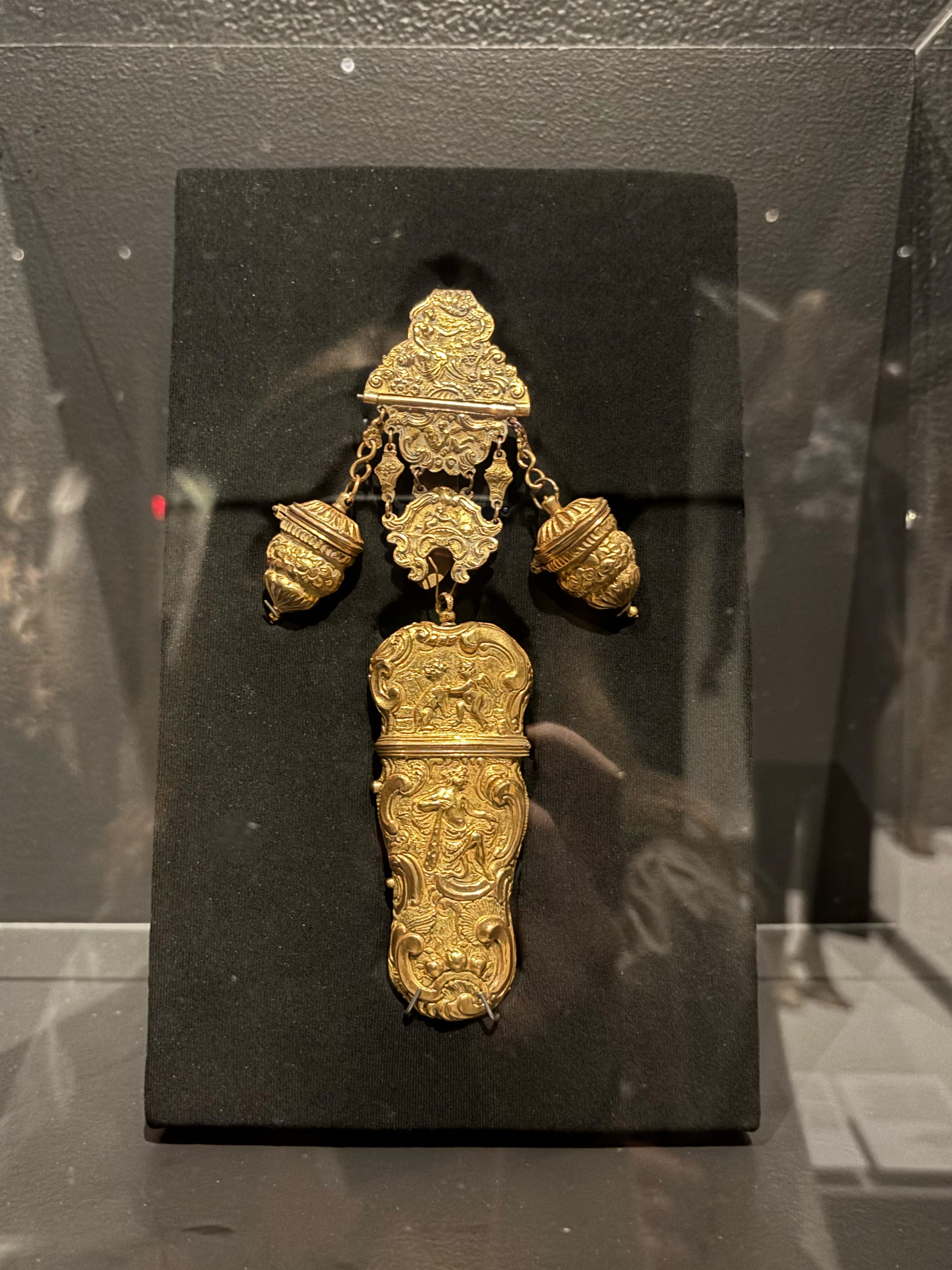
Chatelaines are one of my favorite pieces of fashion history. They were basically the Swiss army knife/ carabiner of the Victorian era. Useful items like keys, scissors, pouches, and pencils were hung from chains attached to a women’s belt. Often they were very ornate. They were also somewhat of a status symbol because they were often worn by the head women of the house and showed that she was a busy women who needed all these accoutrements. Antique chatelaines go for hundreds of thousands of dollars so I’ve taken to creating my own with an amalgamation of of things. The top part of mine is antique, a gift for my high school graduation, the rest is made of recreation parts from Etsy and a vintage chain purse from eBay.
Bustles:
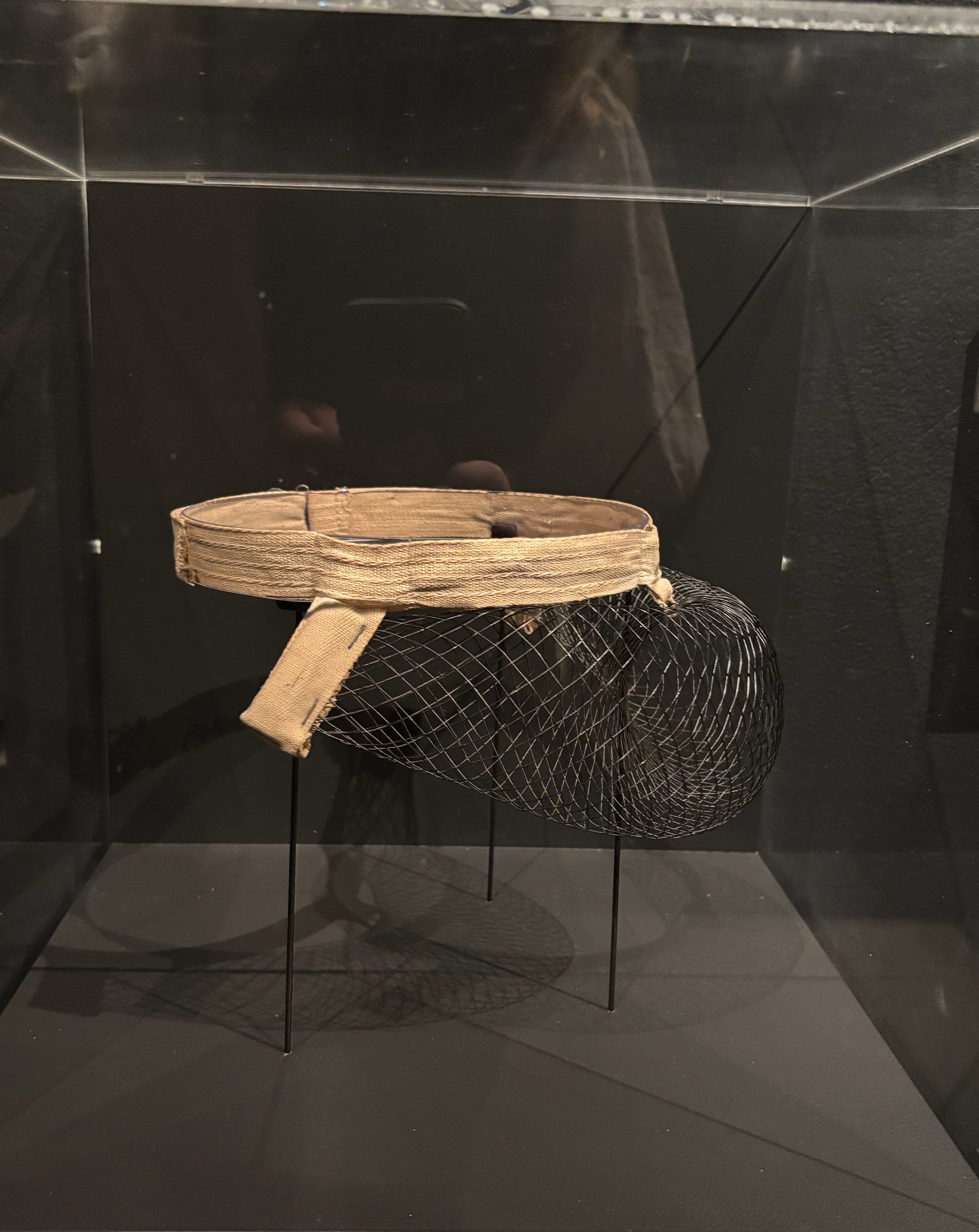
During the late 1860s to 1880s, the fashionable silhouette was one with a very large backside. To create this silhouette, women would wear this understructure called a bustle to augment their silhouette.
Lorgnettes:
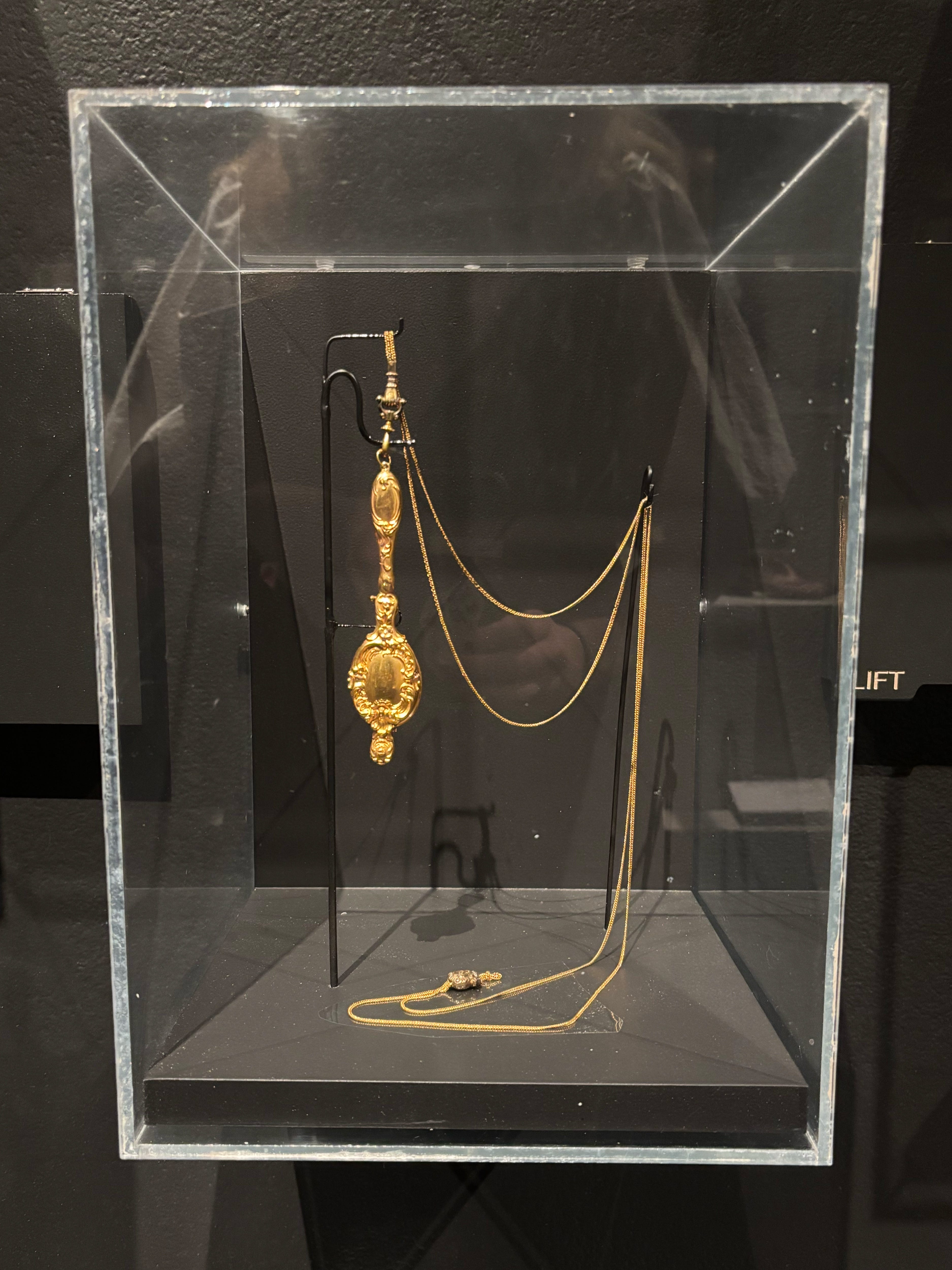
Lorngettes are handheld spectacles or opera glasses which were a women’s accessory in the 17th, 18th, and 19th centuries. They were practical as they served as an optical tool, but many can get very ornate. Often they fold up on themselves and some are mechanized like this pair I saw at the antique jewelry store in my hometown.
Posy Holders:

This was one of the few objects in the “What is it?” section that I was unfamiliar with. This exquisite trinket is a posy holder; these were small receptacles that could be pinned onto clothing and filled with fresh-smelling flowers. At a time when miasma theory ( an obsolete medical theory that supposed that illness stemmed from bad smells) was still widely accepted, smelling sweet and floral would have been a sign that you were hygienic.
Busks:
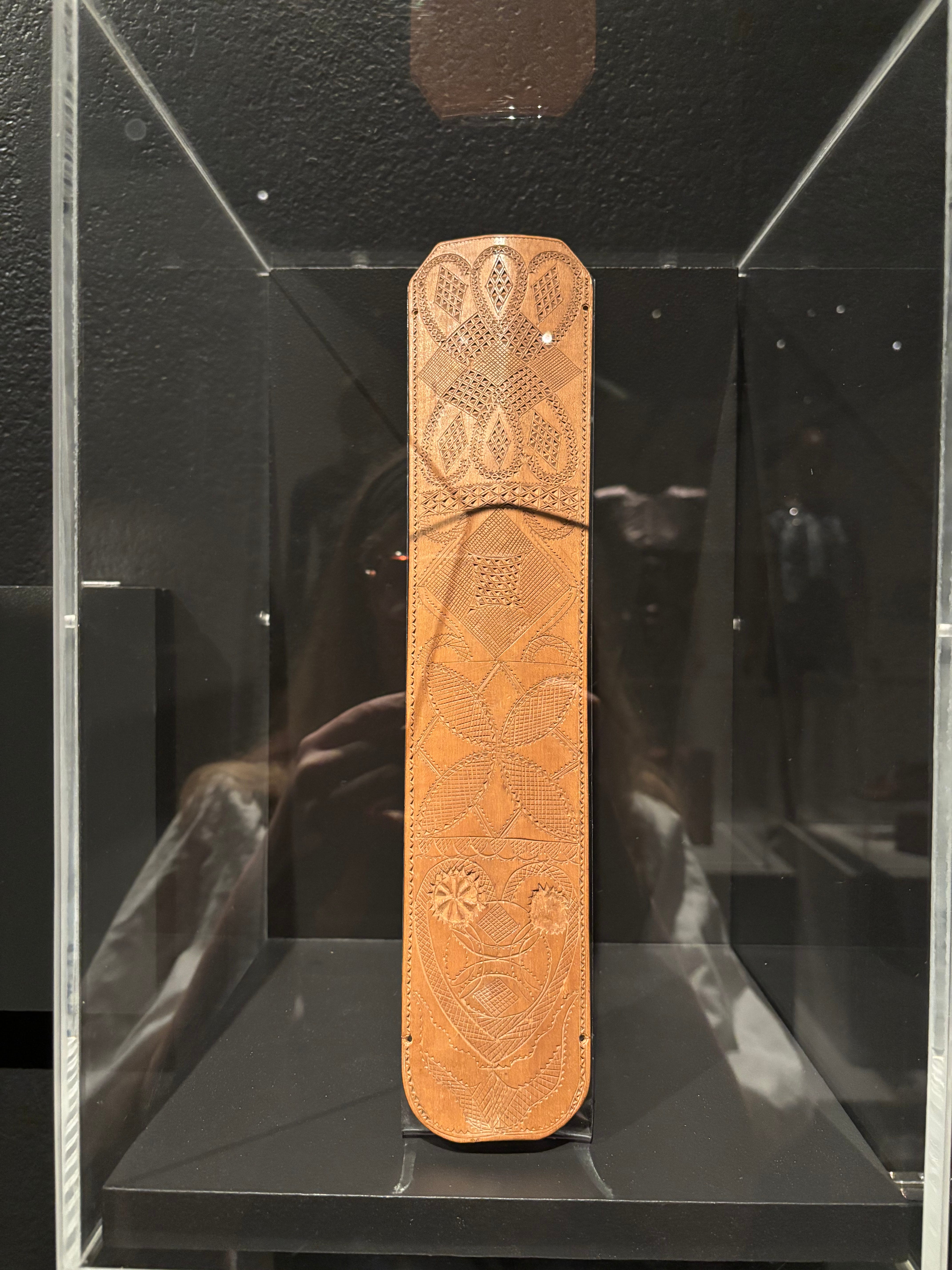
Busks are long carved wooden pieces that were inserted into a pocket at the front of a corset in the early 19th century in order to keep the wearer upright. Often these were given as sweetheart gifts by lovers so that the carved love messages would be close to the woman’s body.
I am so obsessed with this exhibition, I have been about 5 times at this point and will probably go see it again. I encourage anyone in the New York area to come see this exhibition. Outside of these small pieces of gear, there is an extraordinary amount of garments and accessories on display that create a sense of curiosity and wonder. Some are being exhibited for the very first time!
this is so epic!! bring back gear!
I finally went to see this last weekend, almost missed it but your post totally made me desperate to go!! You point out such great pieces here, was so happy to see them irl :) the knitting sheath 🤯